Nanyan Palace
Nanyan Palace
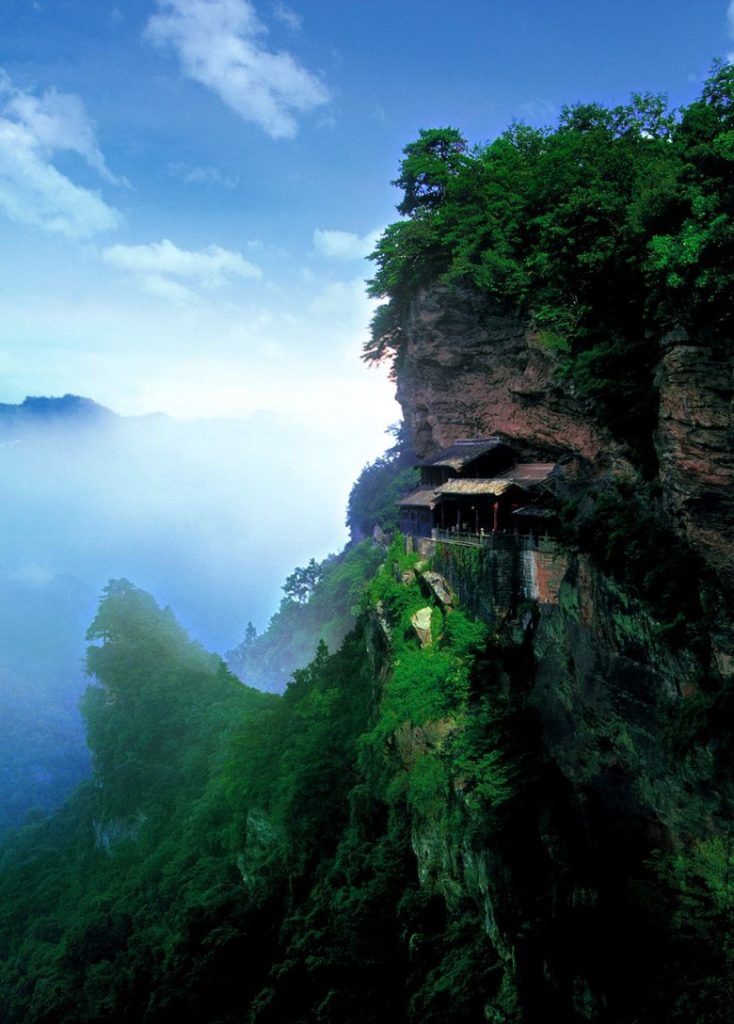
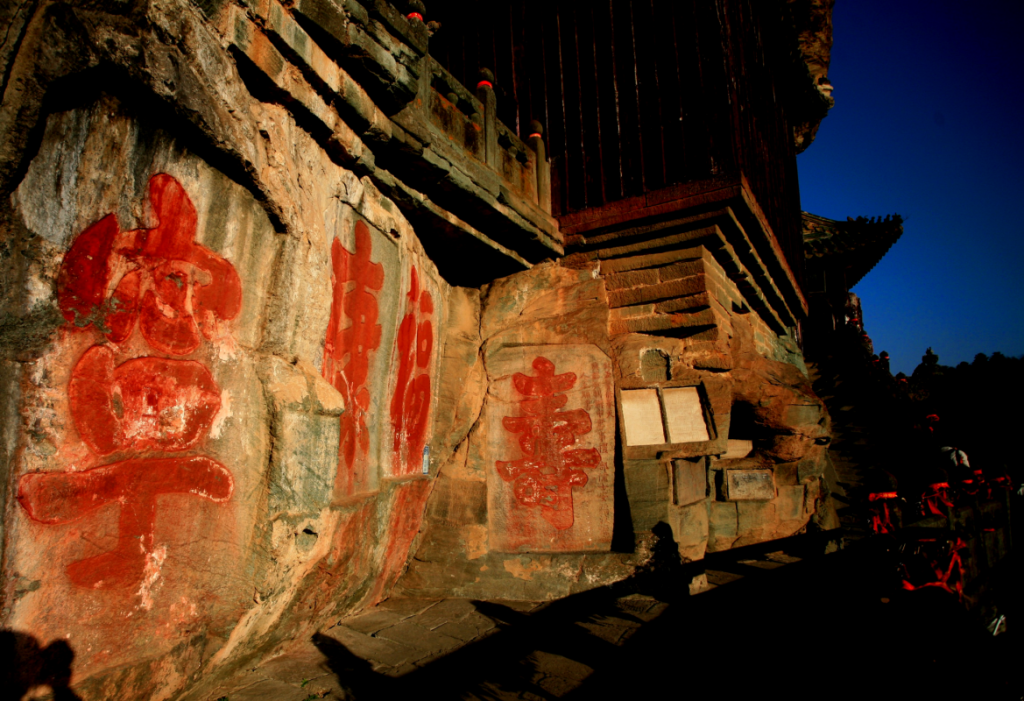
Nanyan, known as the “Holy Land” where Zhenwu attained immortality and ascended to heaven in Taoism, is one of the most famous among Wudang Mountain’s 36 cliffs. Construction of Nanyan Palace began between 1285 and 1310 (the 22nd year of the Zhiyuan reign to the 3rd year of the Zhida reign of the Yuan Dynasty) and was expanded in 1412 (the 10th year of the Yongle reign of the Ming Dynasty). It is situated beneath Duyang Cliff, with a mountain range soaring like a wing hanging from the sky. Currently, 21 buildings remain, with a floor area of 3,505 square meters and a site covering 90,000 square meters. The main structure, the Stone Hall of Tianyi Zhenqing Palace, was built before 1310 (the 3rd year of the Zhida reign of the Yuan Dynasty), measuring 11 meters in width, 6.6 meters in depth, and 6.8 meters in total height. Its beams, columns, doors, and windows are all carved from bluestone. The famous Dragon Head Incense Burner, 2.9 meters long and 0.3 meters wide, juts out horizontally over a deep valley, with a small incense burner placed on the dragon’s head. A stele was erected during the Kangxi reign of the Qing Dynasty to prohibit incense burning here.
Nanyan stands out among Wudang Mountain’s 36 cliffs for its scenery. Located beneath Duyang Cliff, the mountain range soars like a wing hanging from the sky, renowned for its beautiful peaks and ridges. Its peaks are steep and precipitous, covered with lush forests, reaching up to the blue sky and overlooking a deep gorge. Nanyan faces the peaks of Tianzhu to the south, overlooks Wulong Ancestral Temple to the north, is flanked by Zhanqi Peak to the east and Feishen Platform (Ascension Platform) to the west, connecting to white clouds and blue sky above and overlooking a thousand-zhang deep gorge below. It is a famous landscape described as “Its might engulfs Tai and Hua mountains, close to the Milky Way; its grandeur overpowers Min and E mountains, towering above Yulei Peak.” As one of the four major geological relic parks of Wudang Mountain National Geopark, Nanyan’s natural landscape and human architecture (Nanyan Palace) are organically integrated.