Wudang Kungfu
Discover the ancient power of Wudang Gongfu, a premier internal martial art renowned for its focus on mind-body harmony, flexibility, and internal energy cultivation. Unlike external styles, Wudang Kung Fu emphasizes the principle of overcoming hardness with softness, utilizing fluid, circular movements that follow the natural laws of Taoist philosophy. By training in these time-honored traditions—including specialized forms of Tai Chi, Xingyi, and Baguazhang—practitioners can enhance their physical strength, improve cardiovascular health, and develop profound mental clarity.
Wudang KungFu Introduction
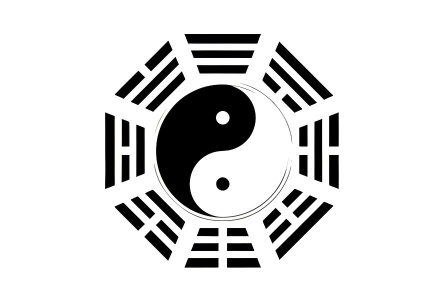
Wudang Martial Arts features distinct Taoist cultural elements, serving as a natural integration of martial arts and health-preserving methods. It not only embodies profound traditional martial arts heritage but also contains exquisite scientific principles. Tai Chi emphasizes “first using the mind to control the body,” followed by “the body following the mind”; Xingyi Quan advocates “using intention rather than force, where intention leads to qi, and qi leads to strength”; Bagua Zhang requires “transforming intention fully” while walking in circles. These all reflect the Taoist concept of “embracing the ultimate principle” to achieve the fitness purpose of “What is the ultimate goal of using intention…
Taichi
Also known as Wudang Internal Martial Arts, Wudang Tai Chi Chuan has its birthplace in Wudang Mountain, the ancestral home of Tai Chi, hence the saying “All Tai Chi under Heaven originates from Wudang”. Zhang Sanfeng is the founding father and creator of Tai Chi Chuan and Internal Martial Arts. Wudang Internal Martial Arts is an exquisite traditional martial art integrating martial arts and health preservation, belonging to Wudang Martial Arts, and it includes three core skills: Wuji (Ultimate Emptiness), Liangyi (Yin and Yang), and Tai Chi (Supreme Ultimate). Wudang Martial Arts was inscribed on the first batch of national intangible cultural heritage lists in 2006…..

Xingyi
Xingyi Quan, also known as Xingyi Boxing, is one of the traditional Chinese martial arts. Although there are various accounts of its origin, the widely recognized founder is Ji Jike (1602–1680), a native of Puzhou, Shanxi (present-day Yongji City), who lived during the late Ming and early Qing dynasties.
When it was first created, Xingyi Quan was called Xinyi Liuhe Quan (Mind-Intention Six Unities Boxing), referring to the unity of: mind and intention, intention and energy, energy and strength…
Bagua
Bagua Palm, also known as Youshen Bagua Palm (Body-Drifting Bagua Palm) and Bagua Lianhuan Palm (Bagua Linked Palm), was originally called “Zhuan Zhang” (Turning Palm). It is a traditional Chinese boxing style focused on changing palm techniques and circular stepping. As one of China’s three major internal martial arts (Neijia Quan), it also serves as a Daoist practice for health cultivation, physical fitness, and self-defense. It was created by Dong Haichuan (c. 1813–1882) from Wen’an County, Hebei Province, during the Qing Dynasty. While traveling in the Jiangnan region, he received inspiration from Daoist cultivation methods….
Qigong
Wudang gongfa includes Wudang Mingmu Gong (eye-nourishing skill), Wudang Huoxue Gong (blood-activating skill), Iron Shirt Gong, Wudang Taiyi Wuxing Shengong, Wudang Qiyin Qiyang Zhuihun Shou, Wudang Shengong Erzhichan (two-finger禅), Wudang Zhanyi Shibatie (sticky clothes eighteen falls), Wuxing Yangsheng Migong (five elements health-preserving secret skill), Yijing Yunshen Gong (Book of Changes body-moving skill), Wudang Ziran Waiqigong (natural external qi skill), Wudang Taiyin Shengong, Wudang Dali Yingzhua Gong….
Healthcaring
Wudang Martial Arts is based on the principle of health preservation. For example, Wudang internal boxing, whether sword or fist techniques, each move is designed to optimally regulate the physical and mental state, with the effects of relaxing tendons, activating blood, nourishing the five internal organs, and cultivating the mind. Even in combat, it does not violate the health-preserving principles, using methods like “using four ounces to defeat a thousand catties” and “borrowing the opponent’s strength to strike.” Therefore, all Wudang Martial Arts….