Wudang Mountain
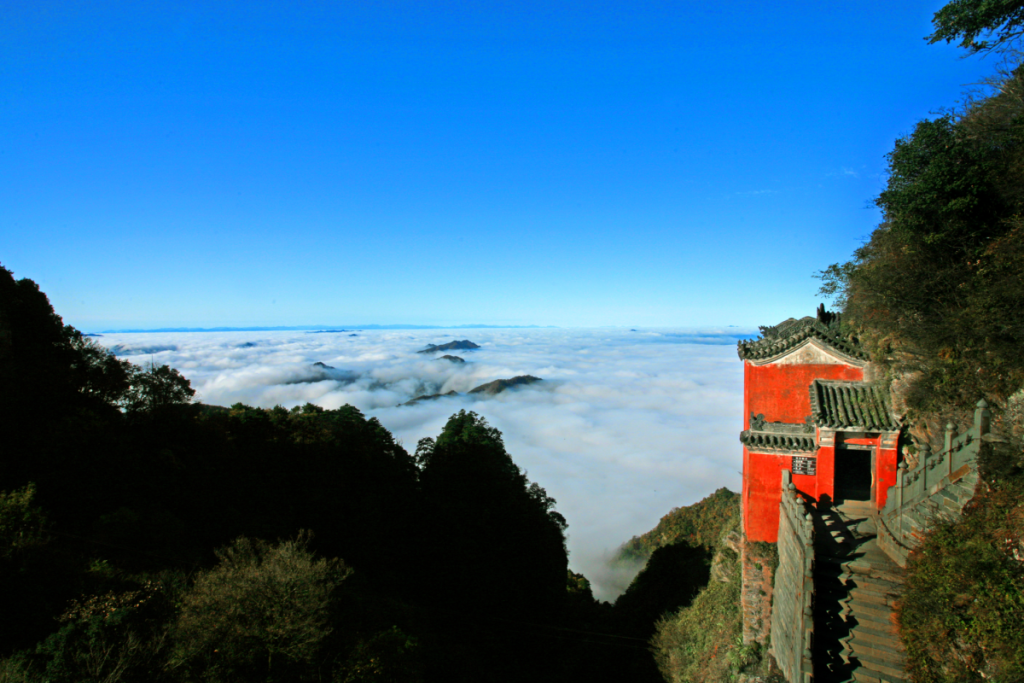
Wudang Mountain, a UNESCO World Heritage site, is the world’s premier destination for authentic Taoist martial arts and spiritual cultivation. As the home of the Wudang Kung Fu Academy, overseen by the renowned Master Qingfengzi, this sacred peak offers an immersive environment for mastering the Wudang Tai Chi system, Qi Gong, and internal meditation. Visitors and practitioners from around the globe come to experience the "Cradle of Tai Chi," where ancient Ming Dynasty temples and mist-shrouded cliffs provide the ultimate backdrop for traditional Kung Fu training in China. Whether you are seeking physical health, mental clarity, or a deep dive into Taoist philosophy, Wudang Mountain remains the definitive sanctuary for internal martial arts excellence and cultural heritage.
Wudang Mountain Introduction
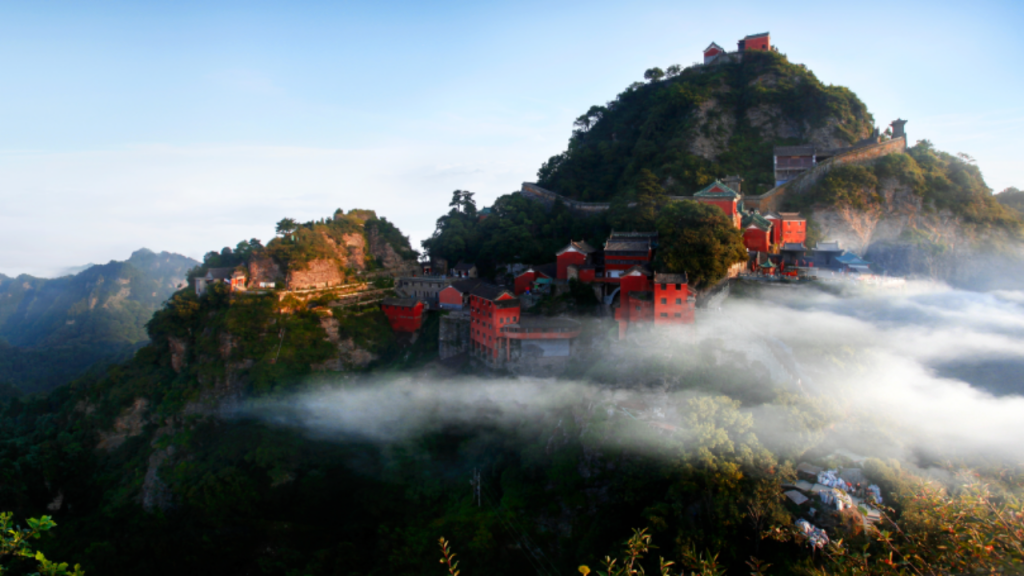
Wudang Mountain, a sacred Taoist site in China, is also known as Taihe Mountain, Xieluo Mountain, Canshang Mountain, and Xianshi Mountain. In ancient times, it was honored with titles such as “Taiyue,” “Xuanyue,” and “Dayue.” It is located in Danjiangkou City, Shiyan City, in the northwestern part of Hubei Province. It borders Xiangyang City to the east, leans against Shiyan City to the west…..
Qiongtai Temple
Qiongtai Temple is located about 10 kilometers southeast of Tianzhu Peak on Wudang Mountain, with a vertical elevation difference of 1,350 meters. It is divided into upper, middle, and lower temples. In the Yuan Dynasty, it was called “Qiongtai Palace.” During the Ming and Qing Dynasties, it was expanded to 24 Taoist courtyards, forming an architectural complex connected by pavilions and bridges, making it one of the largest among Wudang Mountain’s 36 temples. The remaining buildings include reconstructed temple houses from the Qing Dynasty and a stone hall from the Yuan Dynasty. It serves as the starting point of the Wudang Mountain passenger cableway….
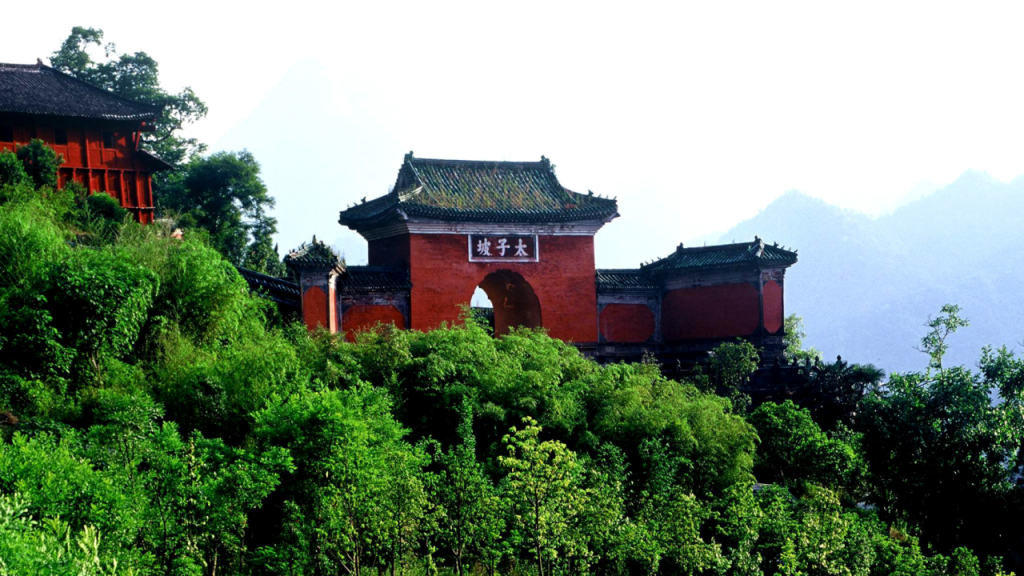
Prince temple
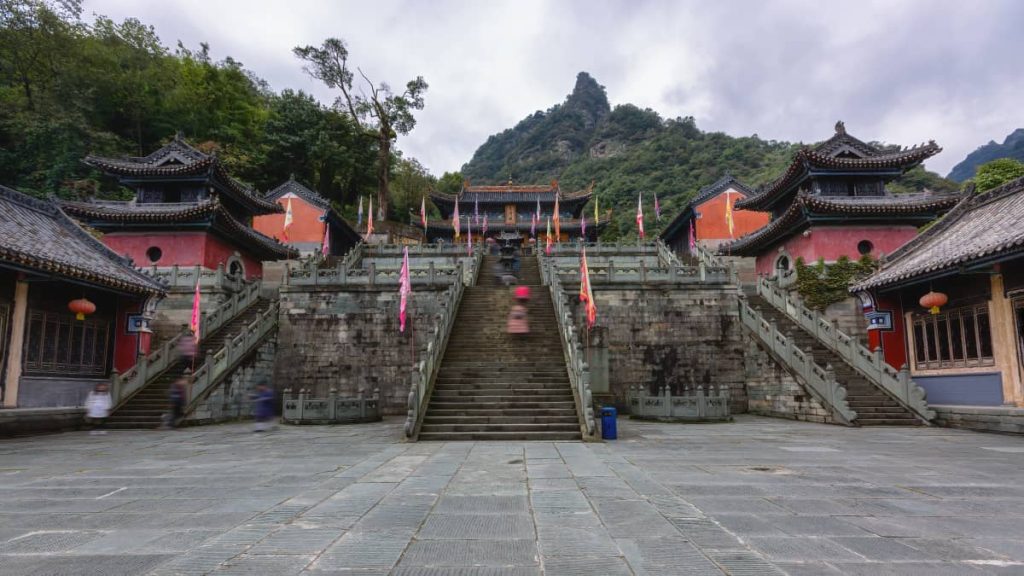
Fuzhen Temple, an ancient architectural complex built on a 60-degree steep slope of Lion Peak on Wudang Mountain, is praised by modern architects as a classic example of architecture utilizing steep terrain. Backed by Lion Mountain, it is flanked by Tianchi Waterfall on the right and the plank road of the Eighteen Bends on the left. From afar, it resembles a lotus emerging from water; up close, it looks like a magnificent fortified city. Ancient architectural masters ingeniously utilized the mountain’s topography, not only creating a site covering 16,000 square meters but also constructing over 200 halls and rooms….
Purple-Cloud Temple
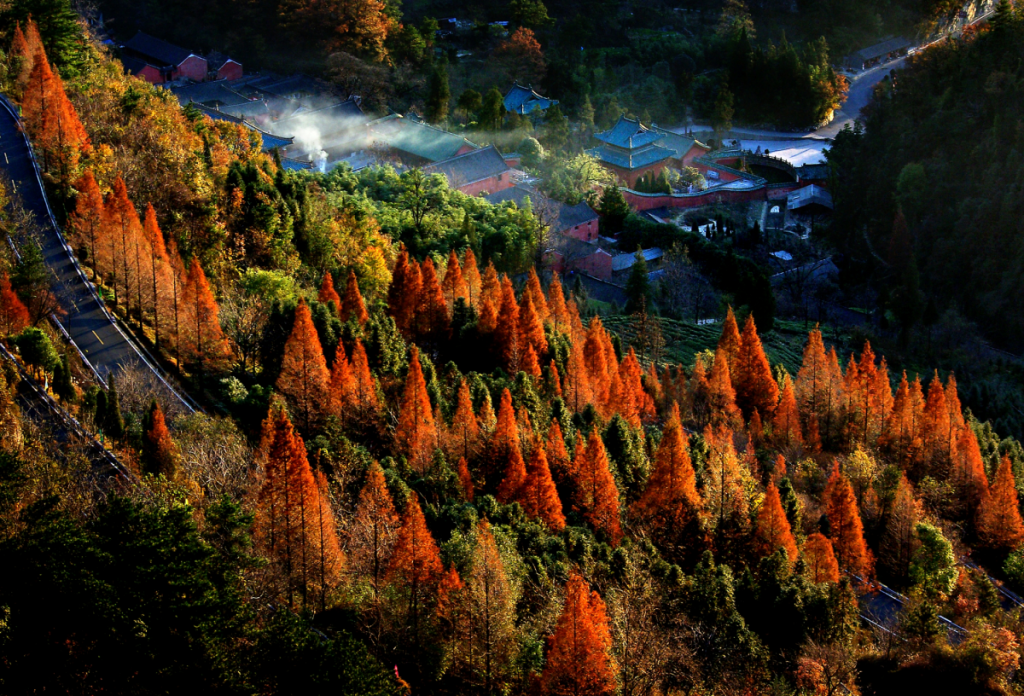
Zixiao Palace is situated at the foot of Zhanqi Peak, northeast of Tianzhu Peak—the main peak of Wudang Mountain. It covers an area of approximately 274,000 square meters. Facing peaks such as Zhaobi, Santai, Wulao, Lazhu, Luomao, and Xianglu, it is flanked by Leishen Cave on the right and Yuji Pool and Baozhu Peak on the left. The surrounding mountains naturally form a precious chair-shaped landscape with two dragons playing with a pearl, and it was bestowed the title “Blessed Land of Purple Heaven” by Emperor Yongle of the Ming Dynasty.
Zixiao Palace is one of the best-preserved imperial Taoist architectural complexes on Wudang Mountain…..
Nanyan Palace
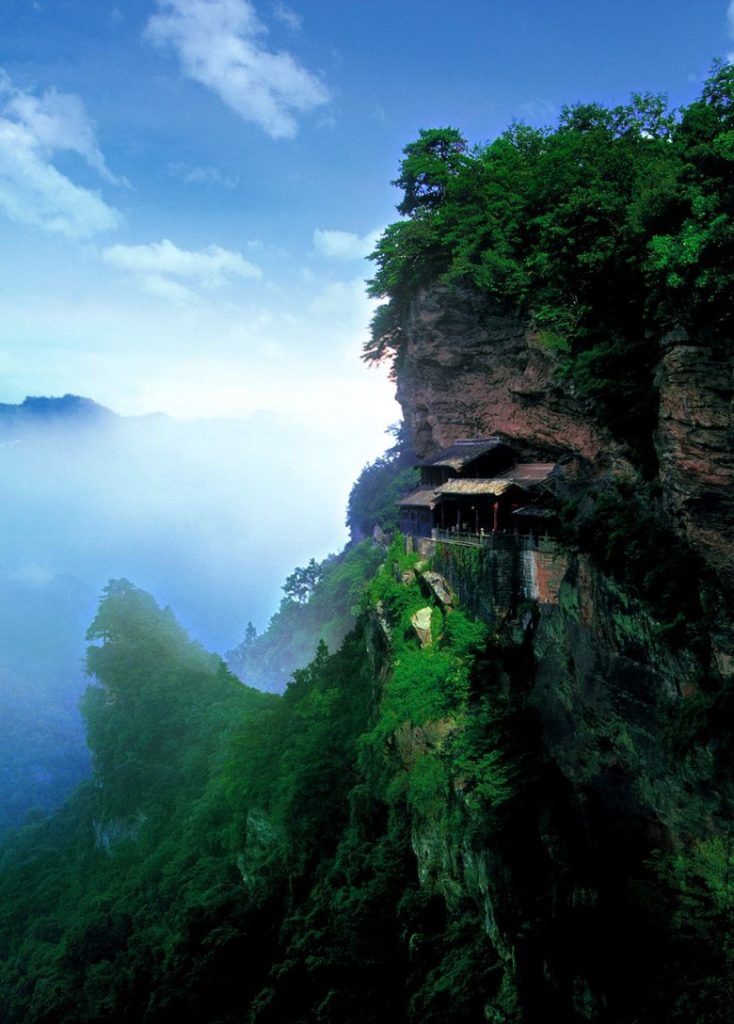
Nanyan, known as the “Holy Land” where Zhenwu attained immortality and ascended to heaven in Taoism, is one of the most famous among Wudang Mountain’s 36 cliffs. Construction of Nanyan Palace began between 1285 and 1310 (the 22nd year of the Zhiyuan reign to the 3rd year of the Zhida reign of the Yuan Dynasty) and was expanded in 1412 (the 10th year of the Yongle reign of the Ming Dynasty). It is situated beneath Duyang Cliff, with a mountain range soaring like a wing hanging from the sky. Currently, 21 buildings remain, with a floor area of 3,505 square meters and a site covering 90,000 square meters. The main structure, the Stone Hall of Tianyi Zhenqing Palace…
Golden Palace
The Grand Peak Taihe Palace, also known as Taihe Palace, is situated on the summit of Tianzhu Peak, the main peak of Wudang Mountain, in Junxian Town, Danjiangkou City, Shiyan City, Hubei Province. Perched at the highest point of Wudang Mountain at an altitude of 1,612 meters, it embodies an unprecedented boldness and a proclamation of victory for conquerors…..