Purple-Cloud Temple
Zixiao Palace (Purple Heaven Palace)
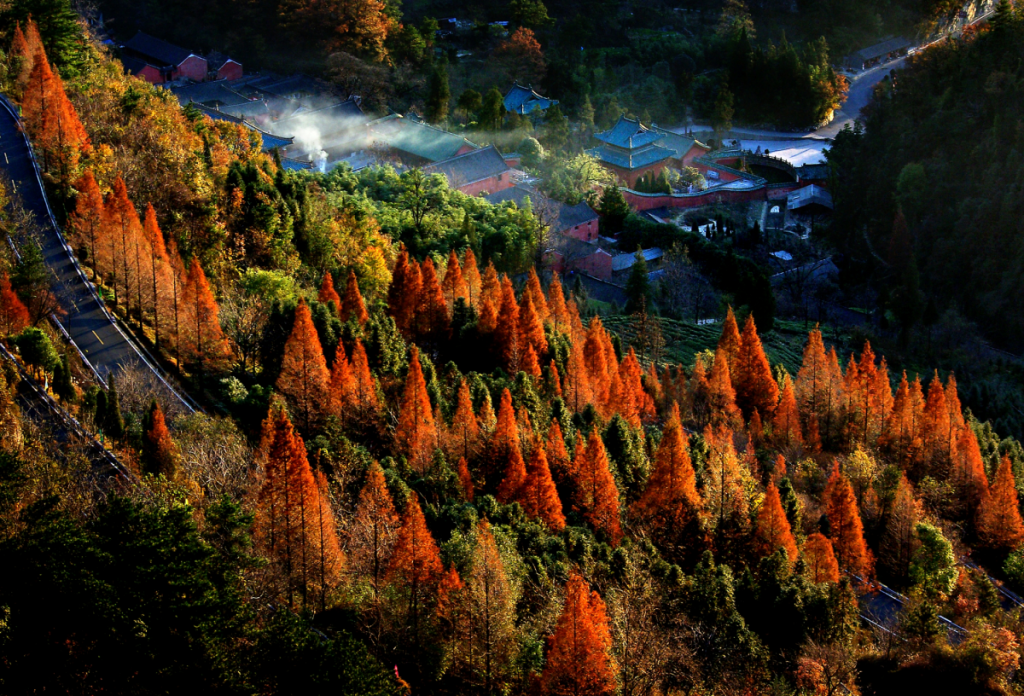
Zixiao Palace is situated at the foot of Zhanqi Peak, northeast of Tianzhu Peak—the main peak of Wudang Mountain. It covers an area of approximately 274,000 square meters. Facing peaks such as Zhaobi, Santai, Wulao, Lazhu, Luomao, and Xianglu, it is flanked by Leishen Cave on the right and Yuji Pool and Baozhu Peak on the left. The surrounding mountains naturally form a precious chair-shaped landscape with two dragons playing with a pearl, and it was bestowed the title “Blessed Land of Purple Heaven” by Emperor Yongle of the Ming Dynasty.
Zixiao Palace is one of the best-preserved imperial Taoist architectural complexes on Wudang Mountain and a vital component of the mountain’s well-preserved building clusters. As one of the historic Taoist temples on Wudang Mountain, it is a key open Taoist site nationwide. In 1932, during the Second Revolutionary Civil War, it served as the headquarters of the Third Red Army, where Marshal He Long once resided.
On February 24, 1982, Zixiao Palace, as an imperial Taoist architectural complex, was designated by the State Council as one of the second batch of Major Historical and Cultural Sites Protected at the National Level. In 1984, it was opened to the public as a national key religious activity site. In December 1994, as part of the Ancient Building Complex of Wudang Mountain, it was inscribed on the World Heritage List by UNESCO.
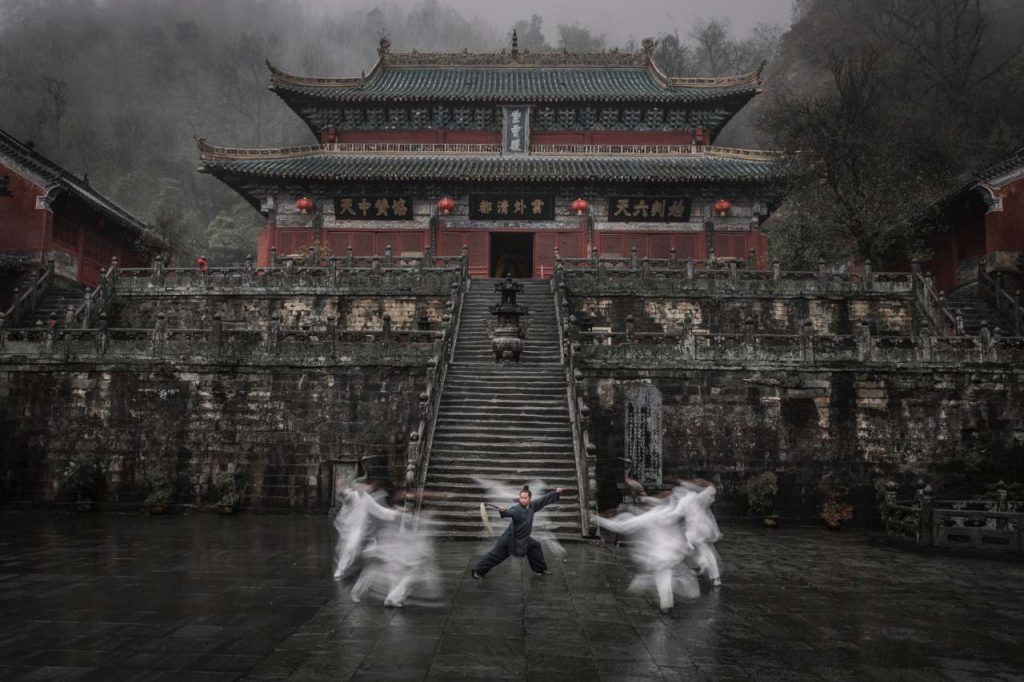
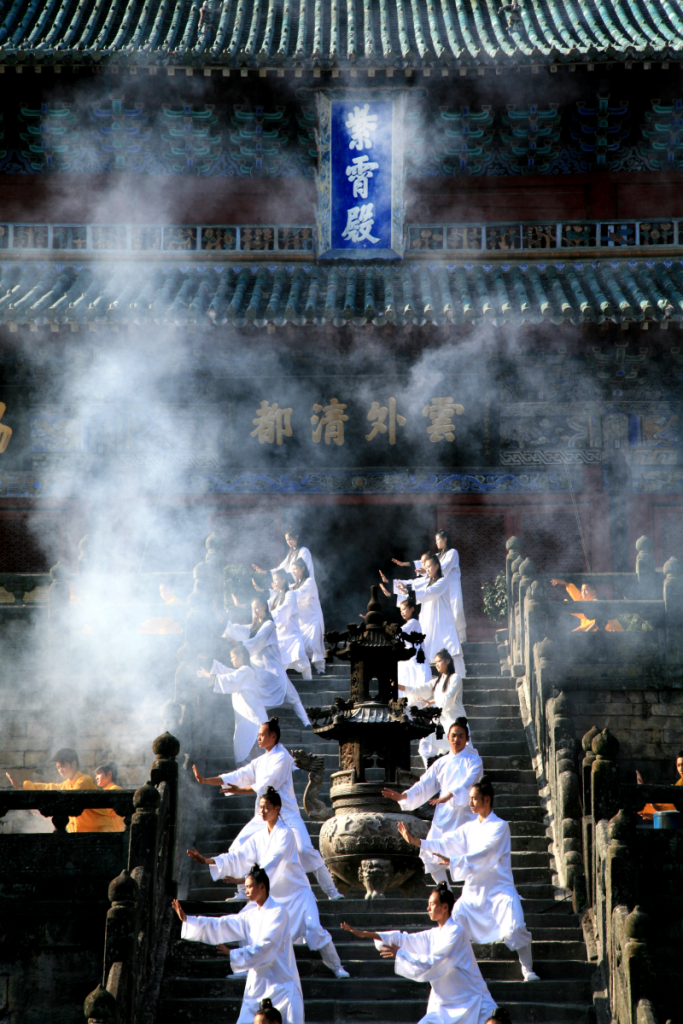
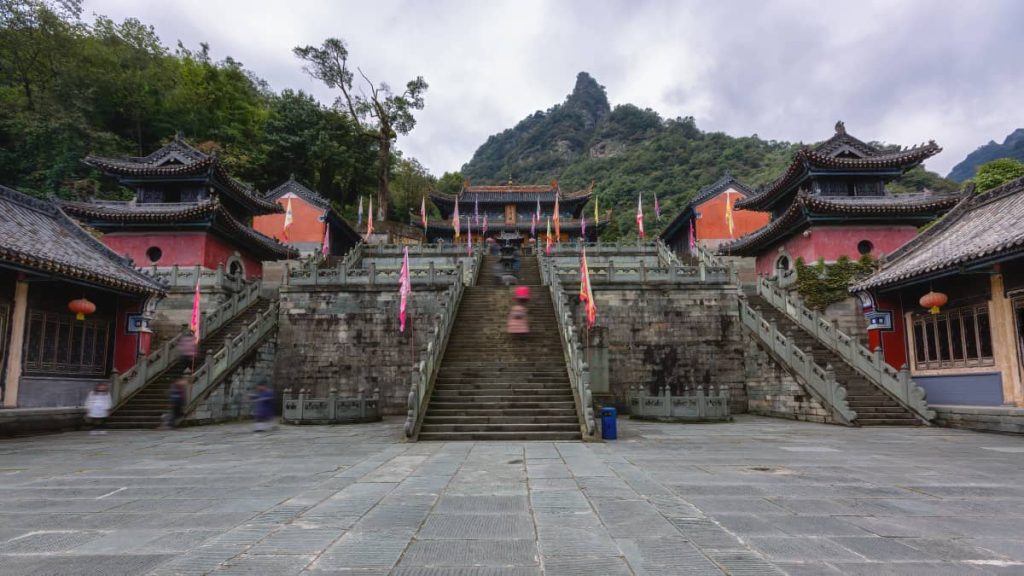
Facing southeast from northwest, Zixiao Palace has 29 buildings in total, with a floor area of 6,854 square meters and a total area of about 274,000 square meters. The buildings are symmetrically arranged, with five terraces along the central axis. From top to bottom, the structures built on these terraces are the Dragon-Tiger Hall, Stele Pavilions, Shifang Hall, Zixiao Main Hall, and Shengwenmu Hall. The two sides are divided into three courtyards by annexes, forming a grand architectural complex with orderly arranged halls and buildings, clear primary and secondary structures. The central wings of the palace are quadrangle-style residences for Taoist priests. The main building, Zixiao Hall, is the most representative wooden structure on Wudang Mountain. It stands on a three-tiered stone platform, with stone steps leading to the terrace in front of the hall from the center and both sides of the platform.
Zixiao Main Hall, the principal hall of Zixiao Palace, is the only remaining wooden-structured hall with double-eaved hip-and-gable roof on Wudang Mountain. As one of the rare large-scale beam-lifting wooden Taoist buildings in ancient Chinese architecture, it features scientific and rational structure and layout, harmonious and unified artistic style, and integrates perfectly with the natural environment, boasting a unique style among the ancient buildings of Wudang Mountain. Moreover, over its long history, it has accumulated the craftsmanship and wisdom of artisans of successive dynasties, epitomizing the brilliant architectural achievements of the Ming and Qing dynasties in China. It holds significant value for appreciation, scientific research, as well as historical and ideological significance.